

According to a report by Hootsuite and We are Social, there are nearly three billion active social media users globally. These figures undoubtedly demonstrate an increasing interest in, and demand for, social media.
It is increasingly apparent that social media is one of the fastest evolving industries, with new trends, innovative technologies, and adaptations being introduced seemingly everyday. It is becoming the talk of the town amongst marketers. As a digital agency ourselves, we are more than aware that staying on top of these changes can be both challenging and exciting. A lot can happen in a year, and this is not more keenly felt than when it comes to the online world.
It goes without saying that it’s vital in today’s market that you do your best to stay on top of trends, where you can, to ensure you create content that connects with your audience and you remain competitive.
Now we are well into 2018 with March just around the corner, lets looks at some of the key social media trends for this year, so you can ensure you work them into your social strategy if you haven’t already.
Ephemeral Content
Snapchat started strong, quickly became popular following its release in 2012. Seeing the overriding attention towards ephemeral content among users, Instagram soon peeked interest and in August 2016 introduced their very own Instagram Stories. Amazingly, Instagram acquired 250 million daily active users within just one year following its launch, exceeding its competition.
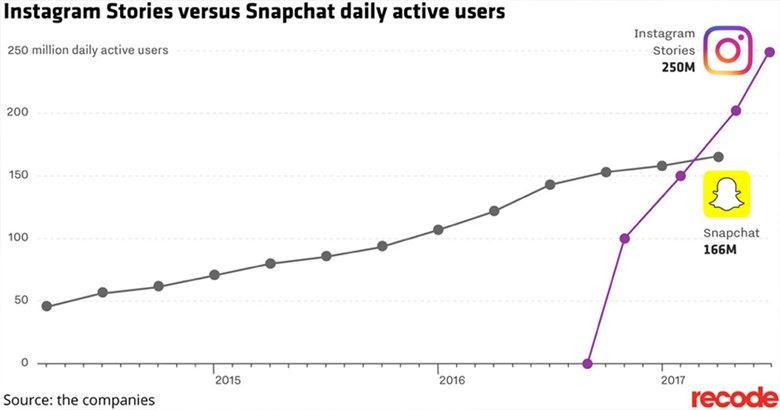
Source: Recode
Essentially, ephemeral content is short-lived content that lasts up to 24 hours before it vanishes from the web. Common examples of this are Instagram Stories or Facebook Live. Due to its increasing popularity, it’s certainly a trend we are going to hear more of in 2018, so I would suggest exploring it for your company if you’re looking to reach a larger audience.
Utilising ephemeral content is a way for you to showcase the personality behind the brand. All marketers know that people relate to people, therefore making the most of developing stories can open opportunities to truly connect with your audience. I recently attended a talk in London which emphasised the importance of taking a more relaxed approach to social media and essentially ‘embracing the ugly social.’ Understandably, keeping your feeds looking attractive and on-brand still applies, but people want to see behind the lens and now is your chance to grab their attention.
To marketeers this may sound scary, because you automatically think that the ability to plan content is eliminated and it’s all going to have to be ad hoc, ‘in the moment style’ posts. Well, don’t panic because planning is still possible and can work to your advantage. It’s more beneficial to have a plan for creating ephemeral content to ensure you get the most out of it.
To form a plan, think ahead, revise your diary and figure out how you can create content around upcoming activities. The content you’re producing is going to be short and sweet, so make sure you prioritise quality to make it interesting and relevant for your viewers. You could even utilise polls or competitions to ask your audience what they would like to see you share as a way of providing content your audience want, with the added bonus of increasing engagement.
There are a myriad of ways you can utilise short lived content, you just need to be creative. Some examples include:
- Events and conferences – If you are holding an event, think about planning a live stream video to capture the day and provide content for those who were unable to attend. On the other hand, if you’re attending events remember to capture the day for your audience.
- Behind the scenes – Use stories as a chance to show behind the scenes of your brand and company. Take users on a journey behind the camera and maybe include sneak peaks of upcoming projects or exciting new products.
- Promotions – Think of ways you can use stories to share promotions, you could do countdowns, offer discount codes, Q&A sessions etc. Be unique and try to think outside the box.
- Q&A – Use Instagram and Facebook live to do Q&A sessions with your audience. This is a great way of answering your customers questions and truly connecting with them. You can save these videos on your page and Instagram profile for users to view at another time, or you can re-purpose them for longer-form content.
- Team activity – Have fun with stories, be less formal and don’t be afraid to show your company culture from behind the lens. Whether that’s taking pictures of a team meal, office antics or a celebration, try to show your personalities and essentially make your brand human and relatable.
Augmented Reality
A term that has certainly caught many people’s attention over the last few years and will continue to do so for 2018, is Augmented Reality (AR). Over the upcoming months, you can expect to see many iOS and Android devices providing an array of new and exciting AR experiences.

AR is essentially a way that your customers can view the world through devices, allowing them to place themselves into another digital world. So far in the world of AR we have seen various selfie filters across platforms including the popular dog, rainbow and flower crown filters. Additionally, the whole world witnessed the rise of Pokémon Go in 2016, taking AR to the next level and entertaining users across the globe, proving that AR is more than just a selfie filter and giving us all a taster of its potential.
One thing to keep in mind, is how quickly AR is working its way into the limelight. This means that if you haven’t thought about interacting with it yet, you may want to reconsider your options. With large brands leading the way with AR, its becoming crucial that we all start to move towards exploring this new platform to ensure we stay ahead of competition.
The future of AR presents some exciting opportunities for brands to engage customers and increase sales. Just two examples of AR include: customers being able to place digital objects inside their homes to get a feel for how the product will look before they purchase, and customers being able to view inside restaurants giving them an idea of the atmosphere before they choose to eat there. AR offers the ability to create customer experiences like never before.
It goes without saying that the impact of AR is going to be industry changing, by giving companies the ability to influence customer’s purchasing decisions through personalised digital interaction. Ad Week states, that ultimately “more people would proceed to cart as they’d be more decisive, leading to an increase in sales and growth in customer loyalty.”
AR is continually changing and developing so you never know what’s around the corner, but from a marketing perspective this is an exciting time and could transform the way brands market products and services to customers.
Influencer Marketing
According to Social Media Week, “influencer marketing is a billion-dollar industry with nowhere to go but up.” More and more brands are investing money into social media influencers, and who knows where it could go next. If you hadn’t already noticed, influencers have been increasingly dominating digital platforms over the past few years, collaborating with leading brands to promote their products and services. These influencers have a huge impact on their audiences and with some having over a million followers, it’s not surprising brands are building relationships and offering collaboration opportunities where they can.

So why are influencers so powerful? As stated above, people relate to people. Followers are more likely to buy into something that’s being used by a real person that they can relate to than through the brand directly, purely based on the trust that is built between the influencer and their followers. Influencers also understand what content speaks to their audience, which allows them to be creative and develop engaging content online which helps brands sell. According to a report by Deloitte, 47% of millennials say their purchase decisions are influenced by social media. This percentage truly demonstrates the impact of influencer marketing and the future direction of consumer purchasing patterns.
With a surge of influencers entering the market, platforms like Instagram have started to put plans in place and ensure their users know when a post is being sponsored. Transparency is key, and even though influencer marketing is working, customers are more likely to trust those that are transparent about working with brands. Moving forward, this will become compulsory and penalties will be put in place for those who don’t comply. In addition, brands are less likely to invest in a large number of influencers with the hope that sheer quantity will provide them with results, they are now more likely to manage those relationships and pinpoint specific influencers for their brand.
In the upcoming year, we can expect to see exciting shifts in the social media landscape. To remain competitive, remember to keep on top of evolving trends and ensure you implement the best ones for your company into your marketing strategy. If you manage to achieve this, it will help to increase brand awareness and raise your online profile. You can stay updated with Ridgeway via our social channels, Twitter, Instagram, Facebook and LinkedIn. If you have any questions, feel free to get in touch with the team.
The original article can be viewed here.