

Why retention wins: practical ways to keep customers coming back
Acquisition is getting harder and in this climate retention is becoming the most dependable source of performance. Emma Grinter, Senior Demand Generation Manager at Rail Delivery Group uses the marketing railcard as an example of a clear objective in the growing rail industry to retain customers in a cost effective way. She describes how there needs to be a retention framework, keeping marketing personalised for the customer, needing to be relevant and clear. She gives the example of added value over discounting which increases conversion at renewal giving the customer the impression they are getting a good deal thereby retaining customers. AI enables us to be smarter with targeting, gaining insights and forecasts, keeping the customer coming back.
View Presentation here

Trust is the new currency: converting brand reputation into revenue in the age of AI
Bee Patel, Marketing Director at IDR states trust is the most valuable asset in business. Brand reputation is now more important than ever has turned into a way to gain commercial growth. Reputation allows brands to not just retain and protect revenue but also potential investors can perceive the value of the brand. Bee describes how this consumer awareness is so important as 60% of consumers wont buy from brands they dont trust. She introduced the R.E.V.E.N.U.E framework as a way to convert reputation into revenue. Including validation by selling UGC through sales: utilising users to generate this through content creators, also experience, one of the most important today. Need to build consistent experiences for clients for brand reputation. Therefore, these processes can be automated with the use of AI to convert brand reputation into revenue.
View Presentation here
How AI is impacting SEO and why digital PR is now your superpower
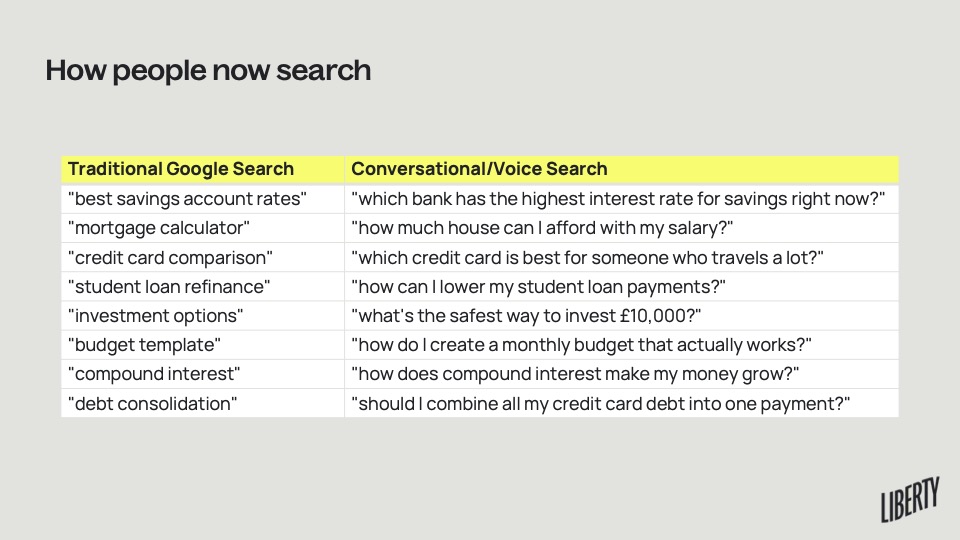
SEO is dead!? AI overviews mean more zero clicks with 60% customers now using CLMs instead of search with visits to google dropping massively. Alex Murphy, Strategy Consultant at Liberty argued that people now search in a more conversational style via chatgpt with the average word count 8 versus 3 with google. Alex argued this means businesses need to adapt with new content that isnt AI generated, build associations with keywords and seeking editorial guides. This will enable the AI overview to include your business and customers will be directed to your site. Therefore, allowing your company to win through digital PR in the new AI landscape.
View Presentation here
5 tactics for driving better performance in an AI-powered global search landscape
AI driver search is rewriting how B2B buyers discover and evaluate solutions, says Susie Cox, Managing Director at Oban International. Buyers’ attention is now spread across multiple AI platforms with AI tools and predictive platforms now guide much of the research phase as buyers are more in loops than straight lines. Suzie and Joseph Bauermeister, Organic Strategist at Oban International set out 5 tactics to navigate for better performance. First is to optimise for both humans and AI where they both want clarity and clear semantics. Second is to accept zero clicks and change measurement framework, for example if AI citing your brand you’re seen as the authority, bringing brand visibility. Third is to create content for the full buying committee. Fourth is to use AI to reshape your paid media strategy by using AI to optimise – feeding the right data and using guardrails. Lastly is to use AI to deliver international growth, good localisation is more important than ever for international growth. Suzie also states that a huge miss is that 76% buyers prefer to purchase in native language even if they are fluent in english. These tactics therefore will help drive better performance in AI search.
View presentation here
Beyond PPC: diversifying marketing channels for sustainable growth
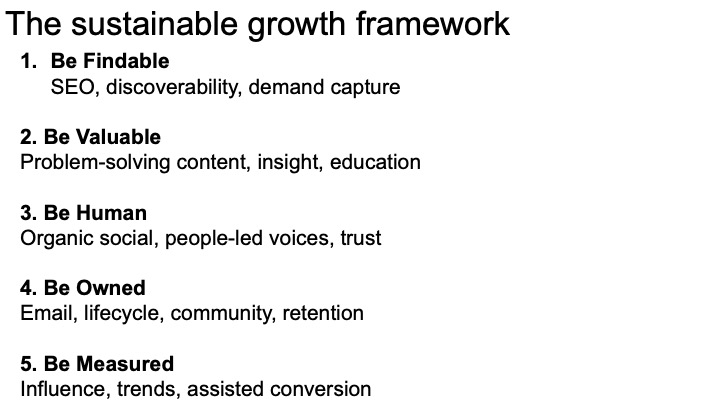
Anuradha De, Head of Marketing at The Citation Group says businesses need to reduce reliance on PPC as it is expensive and highly competitive, instead need to diversify marketing channels to improve ROI and brand sustainability by reducing reliance on PPC and investing in long-term organic growth. The benefits of diversifying into other channels include reduced cost per acquisition, increased organic brand visibility and creates sustainable, long term growth. Organic growth needs to be thought of as flywheel not tunnel. Some alternative marketing channels include SEO and content marketing, email marketing and partnership marketing. Diversifying into these channels can ensure organic and sustainable growth.
View presentation here
Delivering both brand and performance marketing within a limited media budget
Marketers are expected to drive long term brand growth and short term conversions. Both future demand and existing demand are essential but existing normally takes priority. Heightened consumer awareness of ad tracking has led to a decline of traditional attribution with only 26% of iphone users consenting to app tracking. This has resulted in an over investment in lower funnel channels and an underinvestment in upper funnel brand strategies. Davina Dunlea, Founder of Crate outlines some key principles to balance brand and performance. Need to balance audience conversion over channel expansion, pitfalls of spreading budget too thinly, use brand to support performance, always on lower funnel and pulsed upper funnel bursts, lastly attribution pitfalls. Focus needs to be spent on channels that deliver both reach and action. Also a minimum effective dose needs to be used for brand and performance. Measurements should be taken holistically using incrementality, blended metrics and MMM. Therefore, these should be used to deliver both brand and performance marketing with a limited budget.
View presentation here